
Greek Oregano
BASICS FOR YOUR HOME
Kid-Friendly: Yes
Pet-Friendly: Yes
Indoors: Bright window; does well as a kitchen herb
Container Outdoors: Yes
In-Ground: Yes; perennial in zones 5–10
Light: Full Sun
Temperature: Above 32°F; drought and heat tolerant
Water: Low
CARE INSTRUCTIONS
LIGHT: Greek oregano needs full sun — at least 6–8 hours daily. It is a Mediterranean herb that loves heat and bright light. Indoors, a south-facing window or grow light produces the best flavor.
WATER: Water only when the soil is dry — Greek oregano is drought-tolerant and suffers in consistently moist conditions. It is one of the most forgiving herbs for forgetful waterers. Overwatering is the most common mistake.
SOIL & POT: Use a lean, well-draining potting mix or sandy soil. Avoid rich, fertilized mixes — Greek oregano grown in poor soil develops significantly stronger flavor. Excellent drainage is essential.
SEASONAL TIPS: Cut plants back by half after flowering to encourage fresh growth. Oregano is a vigorous perennial; divide every 2–3 years to maintain productivity. Flavor intensifies in hot, dry conditions.
HOW TO HARVEST
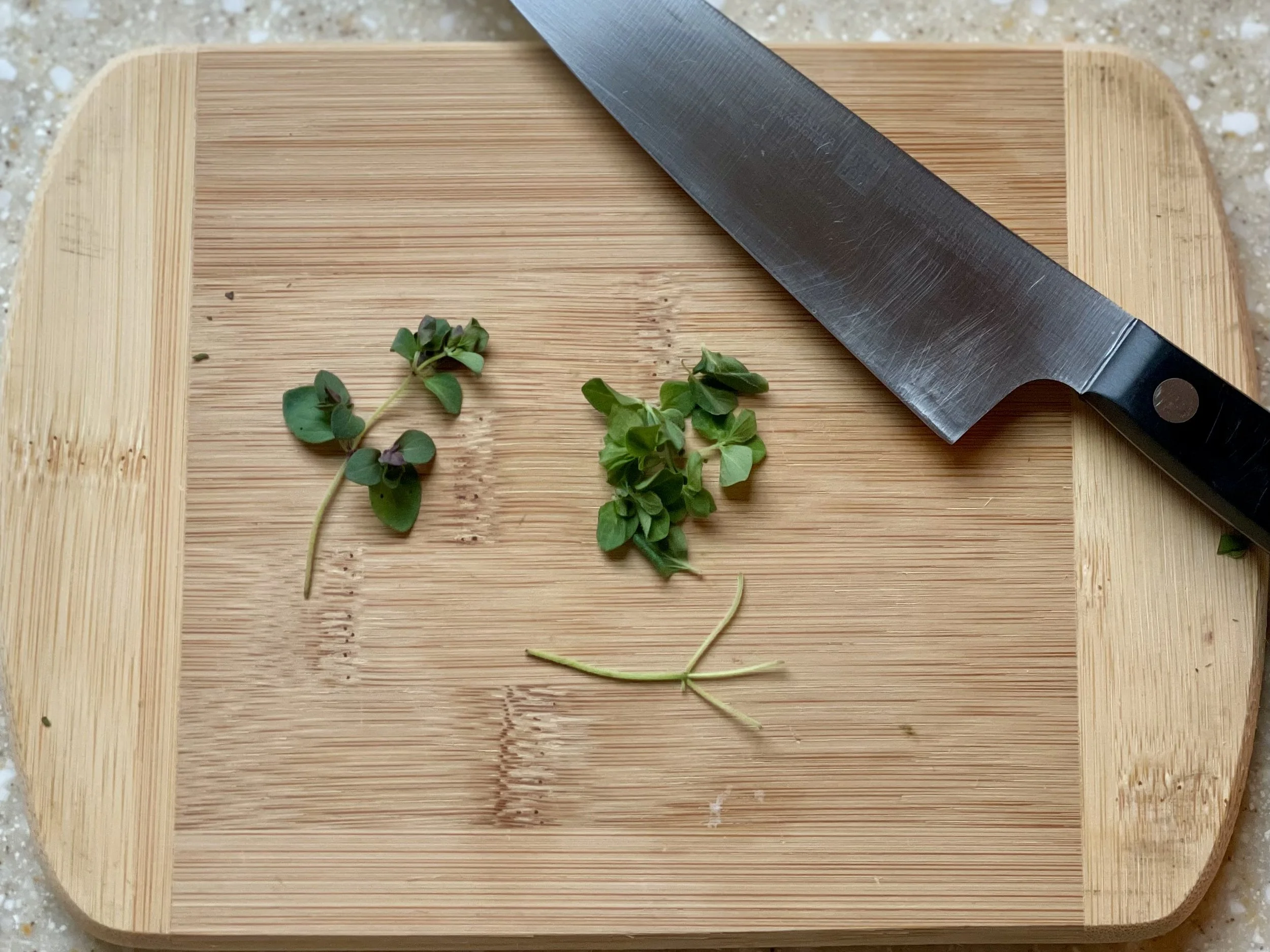
• Harvest stems just before flowers open for maximum flavor
• Cut stems back by up to ⅓, just above a leaf node
• Regular harvesting keeps the plant compact and productive
• Both leaves and flowers are edible
• Flavor is more concentrated when the plant is slightly stressed — don’t over-pamper it
HOW TO USE
Greek oregano is bold, earthy, and intensely aromatic — far more pungent than the common oregano sold in grocery stores. It is the authentic flavor of Mediterranean and Greek cooking.
Fresh
• Sprinkle over pizza, flatbreads, or focaccia before baking
• Add to tomato sauces, marinara, and roasted tomatoes
• Stir into Greek salad with olive oil, feta, and cucumber
• Rub onto lamb, chicken, or pork before grilling
Dried (Preferred Method)
• Hang stems upside-down in small bundles in a warm, airy spot
• Flavor actually intensifies when dried — this is when Greek oregano is at its peak
• Crumble dried leaves over pizza, pasta, or roasted meats
• Add to spice rubs, za’atar blends, and Greek seasoning mixes
Infused
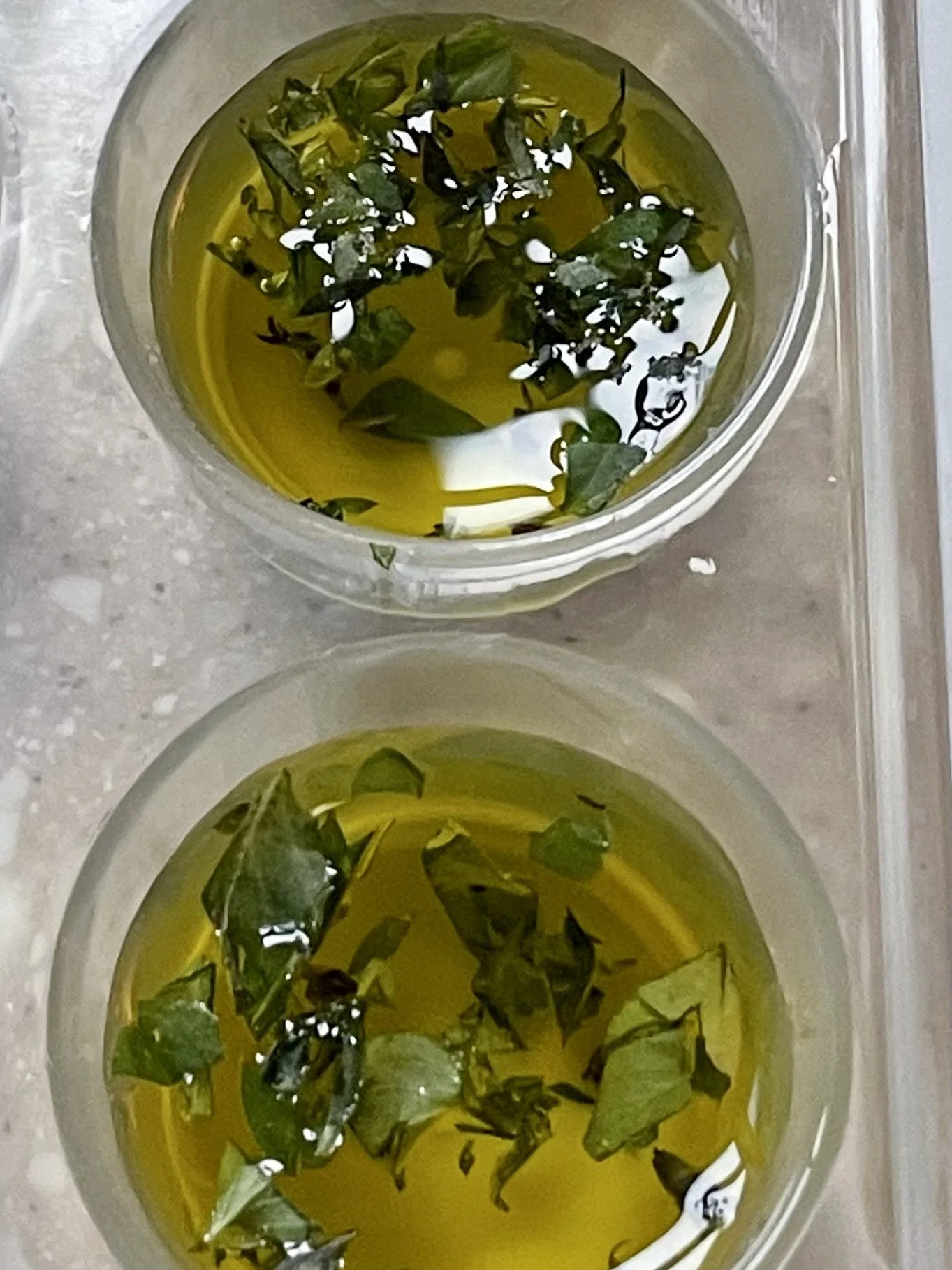
• Steep in olive oil for a flavorful dipping oil
• Add to marinades and brines for meat and vegetables
Tips
• Greek oregano is one of the few herbs where dried is often preferred over fresh for cooked applications.
• A little goes a long way — start with less and taste as you season.
• Pairs classically with tomato, lemon, garlic, lamb, feta, and olive oil.
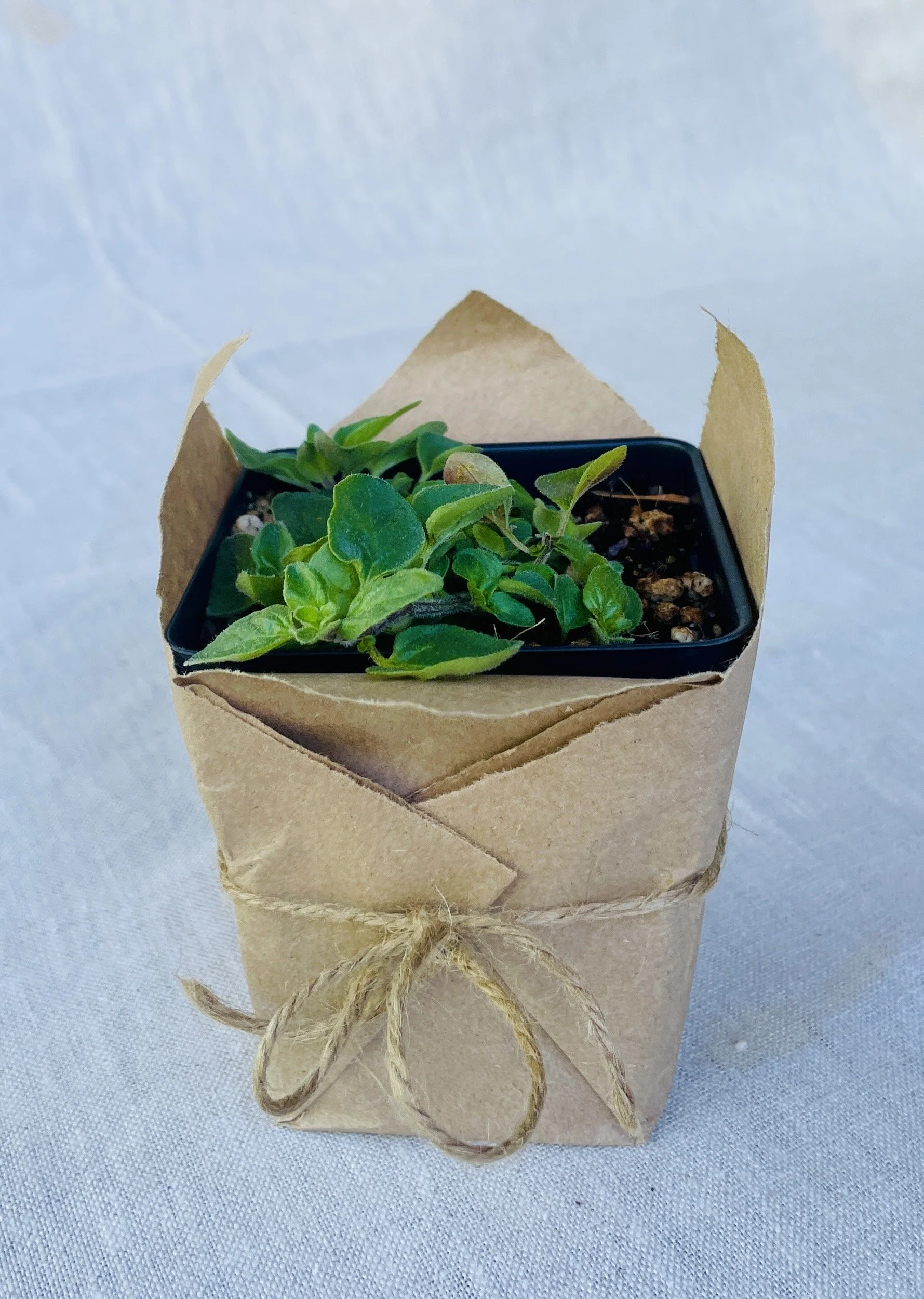
HOW THIS PLANT GROWS Greek oregano grows as a low, spreading mound with small, fuzzy, gray-green leaves on woody stems. It produces tiny white flowers in summer that are edible and attractive to pollinators.
GROW JOYFULLY Greek oregano asks for almost nothing — a sunny spot, lean soil, and the occasional haircut. Give it neglect and it will give you the best seasoning in your kitchen.